Subscribe to our newsletter
Enter your email address below and subscribe to our newsletter

Enter your email address below and subscribe to our newsletter

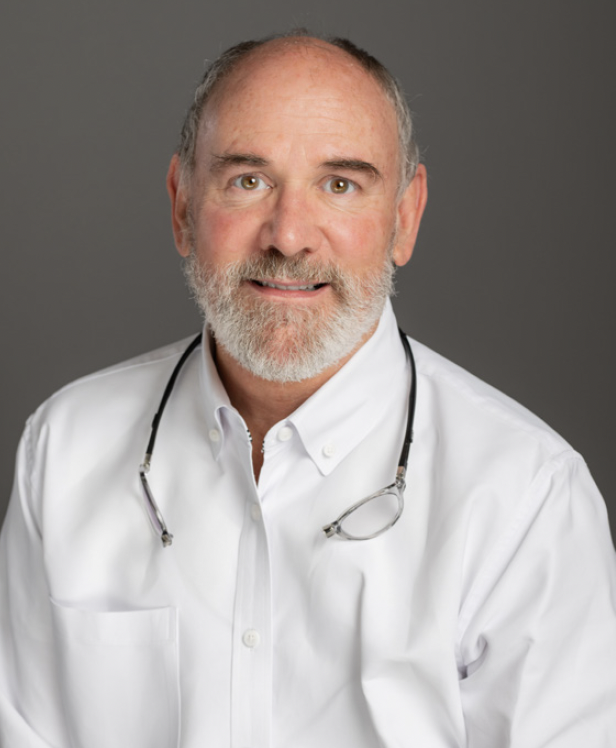
Just as complex as the human nervous system, so was the multi-directional course that landed Dr. Frank Benz, MD, where he is today as a neurologist at Carolina Rheumatology and Neurology in Myrtle Beach.
After graduating with a degree in business management from The Catholic University of America in Washington, D.C., Benz says he was hired by a law firm in DC doing grunt work and research at the Securities and Exchange Commission, but he knew he didn’t want to go into law long-term. So, he moved back to his native Rhode Island, where he landed a job in sales engineering in nearby north Boston. It’s also where he met his future wife, a doctor, who suggested he consider getting into medicine.
“Most people say, ‘I wanted to be a doctor since I was 5 years old,’ but I never really considered it,” says Benz. “It was more along the technical aspects that I was looking at. I always liked the sciences, and then when it was presented to me, I thought it was an interesting profession that I hadn’t really thought about … I was in my late twenties, early thirties, at the time, which I think helped me because I was still working during the day and taking science classes at night for two years.”
More milestones for Benz ensued: getting married to his wife, Wendy Lee, in 1999 and graduating from Eastern Virginia Medical School in 2000, the same year Lee opened Carolina Rheumatology in Myrtle Beach, and he started his residency in neurology at the Medical University of South Carolina in Charleston, where he became chief resident of neurology in his fourth year. Benz joined Carolina Rheumatology in 2004, when the husband-and-wife team changed the practice to Carolina Rheumatology and Neurology.
“Coming from a technical background, a lot of technical wiring on some circuitries and components is kind of analogous with neurology, where you have a processing unit, and you have the external sensors and internal wiring,” says Benz. “I tell my patients the nervous system is like a computer. … Our software is our emotional state, our psychiatric state, and in all those different areas, you can have something go wrong. That’s why it’s a very complex system that you have to put a lot of time into to try to understand. Trying to diagnose a disease process or a disease state is very complicated because you need to take into account all these different layers of the nervous system.”
Benz goes on to explain how rheumatology and neurology align and overlap in terms of different types of pain presentations, with some neurologic disorders secondary to a rheumatologic issue and many crossovers, chronic pain, secondary to either rheumatologic or neurologic issues. For the past several years, he has found migraine and headache medicine to be the most rewarding aspect of neurology.
“Back in 2001, we only had a limited number of medications that were appropriate for treating migraines,” says Benz. “Most of the medications at that point were secondary medications used for some other purpose, like for cardiac problems, seizures, or depression. I delved into looking for ancillary things to treat headache patients, like multivitamin supplements, physical therapy, trigger point injections, nerve blocks, and behavioral therapy. I don’t want to just throw a medication at a person when they come in; it’s a little bit more complex than that.
“We can greatly and significantly improve somebody’s quality of life in their main productive years because migraines usually are the most prevalent in a person’s most productive years of their life – their teens, twenties, through their fifties and sixties,” he continues. “That’s when it’s the most debilitating and disabling. … It’s great to see when you are able to pick the right regimen for a patient and significantly improve their quality of life from having daily headaches that are 10 out of 10 pain levels to, after a couple of visits, getting that down to only a couple of headache days a month.”
When Benz isn’t changing patients’ lives, he says he and his wife have been traveling more, now that their three children are grown and in college, and picking up two popular local hobbies: pickleball and golf. He also spent the last year working part-time at the Dartmouth-Hitchcock Medical Center’s headache clinic every two weeks to continue his commitment to improving the quality of life of migraine patients.
For more information on Carolina Rheumatology and Neurology, visit Carolinarheumandneuro.com.