Subscribe to our newsletter
Enter your email address below and subscribe to our newsletter

Enter your email address below and subscribe to our newsletter
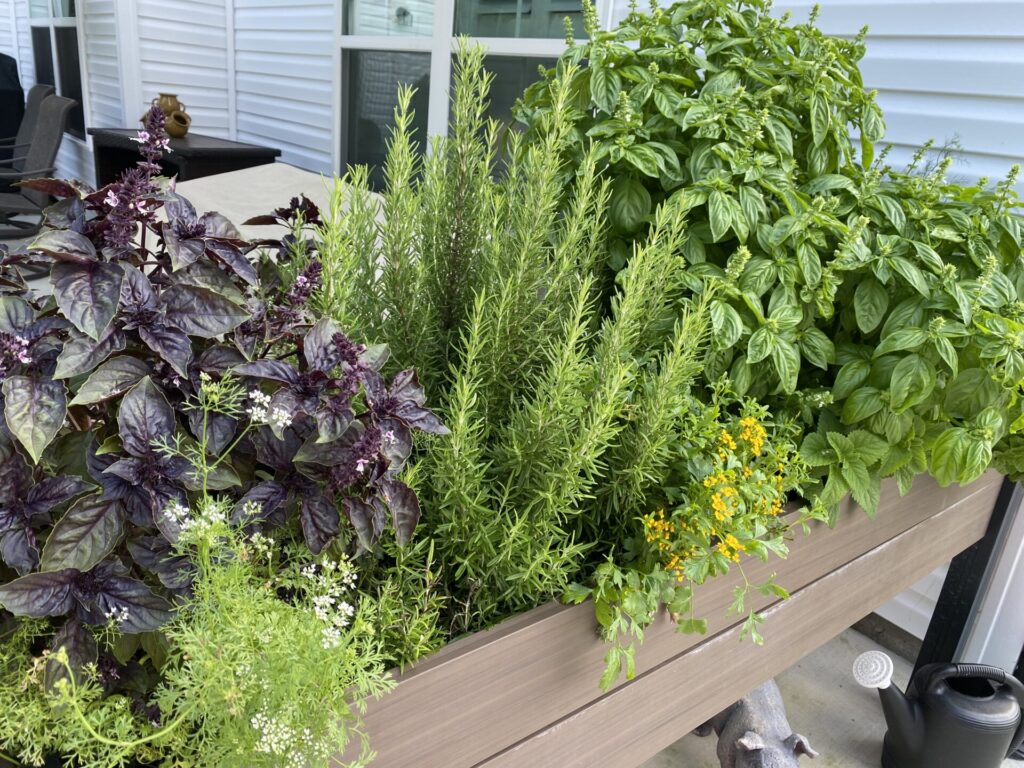
“Parsley, sage, rosemary, and thyme” — the tunes of Simon and Garfunkel sing in my head as I gleefully plant tender herbs in rich soil, daydreams dancing in my head of using fresh herbs at every meal. A sprinkle here, a light, flavorful sauce there, a fresh garnish to adorn each plate; I can envision the nuance of bright spring and sunshine kissing each dish I plan. I imagine a sprig of lemon verbena in sweet tea, a thin stalk of rosemary and a few fresh strawberries in a glass of sparkling wine, and fresh spearmint muddled in a refreshing lemonade. Spring is energetic, and the season grabs our senses with every turn. Spring epitomizes new growth and endless possibilities.
We have lived in eight states, and in each and every home I have created a fresh herb garden. Some were in planted beds, others were in raised beds or rolling planter boxes my husband built for us, and some were simply in an assortment of containers. Even when you’re lacking space, you can always grow a few herbs. As a youngster in the Virginia mountains, I was quite the gardener and even worked at a greenhouse and plant nursery for a few years. I learned a lot about trees, shrubs, flowers, plants, herbs, light, soil, and nutrients. I am so grateful for my time there.
I like to start with the staple herbs I know I’ll want to use in the kitchen: parsley, sage, rosemary, thyme, basil, chives, oregano, and dill. Then I’ll look for lemon verbena (or lemon balm if I can’t find verbena), purple basil, tarragon, and cilantro. If you’re planting in a bed and have more room, then certainly plan for additional plantings like garlic chives, chervil, lemon basil, golden sage, pineapple sage, lavender, fennel, and marjoram.
Plant like-minded herbs together in container gardens. Think basil, oregano, and chives together and parsley, sage, and thyme together. Dill detests being transplanted; if you can find it in a peat pot (degradable), then plant the entire pot and do not remove it from the compostable container. Otherwise you can always plant dill from seed; it grows pretty fast. Also to note – I prefer “fern leaf” dill; it’s delicate and perfect. Basil can become a behemoth, so give it plenty of room and remember to always cut the blooms off as soon as they pop up. Oregano, marjoram, and thyme are trailing plants, making each of them perfect specimens for the edges of your pots.
Mint and lemon-scented herbs will help keep pests at bay, as do scented geraniums. I normally plant a few mint varieties in smaller pots and place them around the seating areas outside.
Mint is invasive and has the potential to take over an area. Lemon balm is almost as invasive but can be maintained more easily than mint. I will often deadhead (cut down to the roots) the entire lemon balm plant and let it begin anew; it grows fast. Rosemary is basically a shrub; it gets big in containers. Either plant it alone or reconcile yourself to the fact that you’ll have to keep cutting it back and replanting it with more soil because the roots will consume it all. I’ve been known to cut a third of the plant off, dig the rosemary out from the planter, trim the roots (a little haircut), and then replant it with fresh soil. Better yet, if you have room, plant it in the ground and remember to deadhead it before new growth appears in early spring.
I often let the cilantro and tarragon bloom a little, but I always trim back the basil blooms. Just remember though that most herbs are not grown for their flowers, and letting them bloom only takes away from and can even impede the usefulness of the plant overall. Also be aware that Japanese beetles love basil. These little devils eat holes in the leaves, and you’ll find them hanging out on the underside of the petals. Place a beetle trap nearby to lure them away.
I do not like using any insecticide or pesticide on my herb garden. For raised beds and container gardens, I like to use Miracle Gro® Moisture Control Potting Mix. This mix is my favorite for a few reasons. First, it contains enough nutrients, giving your plants a good start. Second, the ratio of soil to perlite and sphagnum peat is perfect, which allows the soil to retain moisture and to also whisk away moisture from the roots as needed. Thirdly, I like that the mix is soft and billowy, which makes it easy to use. Halfway through the season I fertilize with Osmocote® pearls. The fertilizer is encapsulated into tiny slow-release balls that will not burn your plants. And while I do like the Miracle Gro® soil, I am not a fan of mixing the powder and liquid and having blue-stained hands. Osmocote® is super easy, and it’s what we used at the garden nursery for all the annual flowers.
I hope by now you’re daydreaming about your beautiful and useful herb garden and all the amazing meals you’ll enhance and infuse with fresh herbal notes! Here are a few herb garden photos of mine: one from our previous home in Nashville in the planter box on wheels my husband built; another photo is from our home in North Myrtle in a raised bed we purchased from a feed store; and the last photo is an in-ground bed we have in Hilton Head Island. I have had some incredible herb gardens over the years, and I only wish I had taken photos of them all. I want to send you off with a few recipe ideas to use your forthcoming fresh herbs.
Thyme: Soups, Beef, Chicken, Veal, Vegetables
Sage: Perfect for Poultry, Potatoes, and Butternut Squash
Rosemary: Steaks, Vegetables, Soups, Cocktails, Breads, and Sauces
Lemon Verbena/Lemon Balm: Tea/Lemonade, All Seafood, Poultry, Pasta Dishes, Desserts, Fresh Fruits
Basil: Pasta Primavera, Italian Sunday Sauce, Pesto, Caprese Salad, Bruschetta, Antipasto, Pizza
Fresh Pesto Recipe:
¼ c. pine nuts, 1 Tb. lemon juice, 1 small garlic clove, pinch of sea salt and black pepper, 1 c. fresh basil leaves, 2 ½ Tb extra virgin olive oil, 2 Tb grated parmesan
Pulse the pine nuts and garlic in a mini chopper. Add the remaining ingredients and pulse lightly until well combined.
Thyme: Soups, Beef, Chicken, Veal, Vegetables
Sage: Perfect for Poultry, Potatoes, and Butternut Squash
Rosemary: Steaks, Vegetables, Soups, Cocktails, Breads, and Sauces
Lemon Verbena/Lemon Balm: Tea/Lemonade, All Seafood, Poultry, Pasta Dishes, Desserts, Fresh Fruits
Mint: Tea/Lemonade, Cocktails, Lamb, Tabbouleh, Yogurt Sauces, Sauces, Fresh Fruits
Watermelon Salad:
Toss fresh cubed watermelon, cucumber slices, feta cheese, and fresh mint leaves for a refreshing summer salad. Dress with a drizzle of extra virgin olive oil and honey, plus a squeeze of fresh lime juice, and a pinch of salt.
Tarragon: Dressings, Sauces (Béarnaise), Seafood, Chicken, Lamb, Beef, Compound Butters, Vegetables
Herbed Compound Butter:
Combine 1 stick of softened butter with ½ tsp. each of fresh herbs: snipped rosemary leaves, chives, tarragon leaves, and thyme. Add a pinch of sea salt and ground black pepper.
Oregano: Tomato-Based Sauces, Pasta, Pizza, Vegetables, Chicken, Breads, Vegetables, Pasta
Dill: Perfect with Salmon, Seafood, Tartar Sauce, Dairy Dips, Cucumbers, Salads, Potatoes, Tzatziki
Tzatziki:
Combine ¼ c. grated cucumber, ½ c. plain greek yogurt, 1 ½ tsp. fresh lemon juice, 1 tsp. extra virgin olive oil, 1 grated small garlic clove, 1 Tb fresh dill leaves, pinch of sea salt, and pinch of white pepper. Optionally you can add 1 Tb. of fresh mint leaves.
Chives: Atop Deviled Eggs and Caviar, Vegetables, Omelettes, Vegetables, Soups, Salads, Dips
Marjoram: Pork and Sausages, Carrots, Potatoes, Soups, Omelettes, Frittatas, Green Beans
Chervil: Soups, Salads, Vegetables, Eggs, Seafood, Chicken, Veal, Peas, Potatoes, Compound Butters
Parsley: Garnish, Fresh Pressed Juices, Chimichurri, Compound Butters, Sauces, Soups
Cilantro: Pico de Gallo, Ceviche, Most Spanish and Mexican Dishes, Rice
Fennel: I think of this more as a vegetable than an herb. But it is actually both. The bulb is a vegetable and the feathery fronds are used as an herb. Pastas, Salads, Eggs, Seafood, Meats, Soups, Salad