
Subscribe to our newsletter
Enter your email address below and subscribe to our newsletter
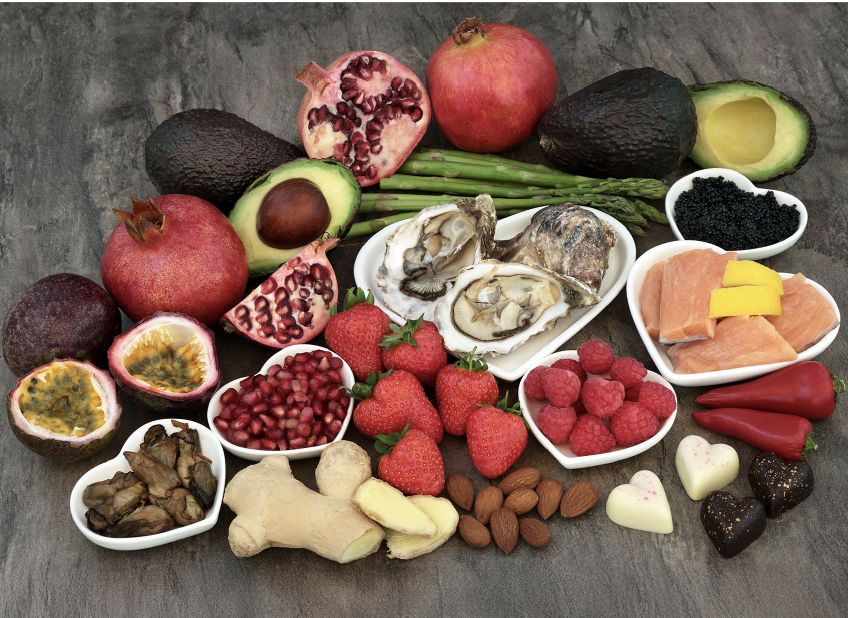
Myths, folklore, wives’ tales, and even personal testaments abound over the properties of certain foods labeled as aphrodisiacs. It’s no coincidence that the standard fare for special sweetheart dinners often includes foods that may enhance your evening.
The word “aphrodisiac” comes from the Greek goddess of love herself, Aphrodite, who has been associated with lust and raw passion. Also to note, the Roman goddess of love was Venus, who is linked to a more motherly expression of love and fertility.
The properties of the foods suggested have varying reasons behind them. Whether they boost blood flow, initiate relaxation, represent fertility, or even look somewhat “suggestive,” these foods just may provide a path to setting the “mood.”
Oysters are full of zinc, which is supposed to support a healthy prostate and boost sperm counts. Although its association with increased libido is a myth at best, this popular shellfish-mollusk may never live down its reputation. It’s a widespread belief that Giacomo Casanova, the famous 18th-century Venetian writer and renowned lover, ate fifty raw oysters daily to aid his stamina for seduction.
Caviar is linked to Aphrodite, Russian Czar Nicholas II, and Casanova. It does contain nutrients to help boost circulation, increase hormone production, and enhance moods. Caviar is also linked to fertility; the indulgent roe is, after all, eggs. Sharing an extravagant food with a partner probably boosts intimacy and increases feelings of connection. Maybe it’s a placebo effect, but I’m in for a little champagne and caviar!
Asparagus is listed in the Kama Sutra, the Greeks included the stalk in love poems, and the French often ate asparagus before their wedding night. Maybe it’s the phallic shape, maybe it has some nutritional properties that affect our system, or maybe it’s all bunk. But I love asparagus, so why not?
Artichokes were fed to the husbands of Swedish women to potentially increase their desire in the bedroom. Total folklore, yet the humble artichoke is one of my favorite vegetables, and it’s an easy appetizer to share.
Beet’s dark red color most likely steered the belief by association with the heart’s connection with the color red. Greek mythology legend has it that Aphrodite ate beets for beauty, and Romans believed beet juice increased feelings of “liveliness.” Nutritionally, beets are a great source of boron, which may increase levels of sex hormones.
Avocados were thought to ignite passion by the Aztec people, and young virgins in the culture were forbidden from leaving their homes during avocado harvest. The fruit (yes, it’s classified as a fruit) is packed full of vitamin E, which can boost skin health.
Pomegranates are thought to represent fertility and abundance, with their many seeds. Pomegranate juice is said to lower cortisol levels, which, in turn, helps to boost natural testosterone.
Fig leaves were used to cover the bodies of Adam and Eve in the Bible and are thus also associated with modesty. The fruit itself was enjoyed often by Cleopatra, and the Greeks believed the fig to be a symbol of love, often drizzling them with honey for an aphrodisiac treat.
Strawberries are red and heart-shaped. So yes, they are on the list. The strawberry was also a symbol of Venus, the Roman goddess of love. Have you ever run across a double strawberry? If so, legend has it that you should break it in half and share it with your loved one.
Chocolate is definitely associated with Valentine’s Day, and within the Maya civilization, it is rumored that cacao beans were traded for a night of lovemaking at brothels. Perhaps the tradition of presenting a box of chocolates is a trade for hanky-panky? And we never knew! Nutritionally, chocolates contain phenethylamine, which is released into the brain, triggering dopamine when we fall in love, as well as tryptophan, which aids in serotonin production, helping to boost happiness. This chemical reaction is quite debatable, providing the quick breakdown inside the body; thus, it may never reach the brain. Still, who doesn’t love chocolate?
Honey was prescribed by Hippocrates for improved sexual performance. In the ancient Greek culture honey was promoted as a symbol of fertility, and the Egyptians traditionally gifted honey to newlyweds for a harmonious union. Fun fact: the word “honeymoon” comes from the root word “honey” as a sentiment of hope for a sweet marriage. Honey also contains trace amounts of boron, aiding in hormone regulation.
A few suggestions for a date night dinner at home…
Start with a pomegranate martini and six oysters on the half shell, followed by a glass of champagne and a serving of traditional caviar on blini with crème fraîche. Next up, create a beautiful beet salad with butter lettuce, quartered artichoke hearts, pickled baby beets, soft goat cheese, and avocado slices—dressed with fresh pepper and a simple light lemon vinaigrette. For an entree, ladle ⅓ c. of Béarnaise sauce onto a plate and top with crab cakes; serve with freshly steamed asparagus with a bit of fresh lemon zest. Finish the evening with a decadent cheesecake made with figs, chocolate, honey, and strawberries.