

Subscribe to our newsletter
Enter your email address below and subscribe to our newsletter
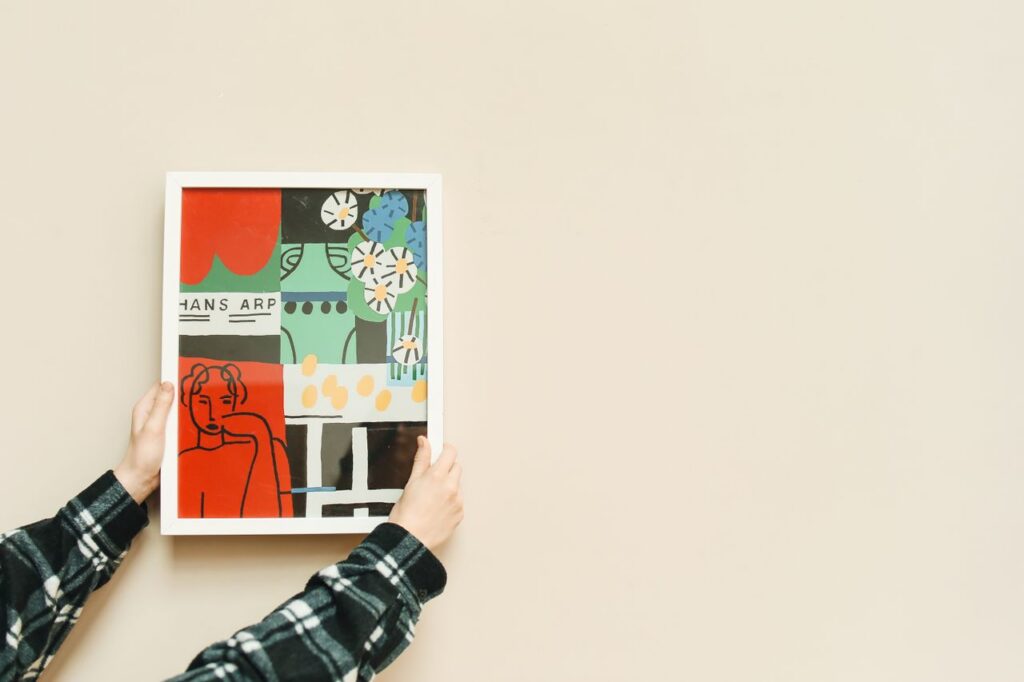
Six months after the movers left, Claire’s living room still had furniture arranged just right. Curtains hung, rugs down, everything measured and leveled. Yet something about the space still felt like a hotel room rather than home. The walls were bare except for one mirror she’d had before the move. Why some rooms never feel finished usually comes down to exactly that gap. Everything functional is in place, but nothing on the walls tells you whose room it is. Furniture fills a space. Art is what makes it feel resolved, and skipping that step is easier to do than most people realize.
A room can have the right sofa, the right lighting, and the right rug and still feel unresolved. None of those elements give the eye a place to land. Furniture organizes function. Art organizes attention. It gives a room a focal point that pulls the whole layout together, instead of leaving it as a collection of separate, functional pieces. This gap shows up most after a move. Priorities naturally shift toward unpacking boxes and hanging curtains long before anyone gets around to the walls. Style shifts that happen when you move to a new city go beyond the closet. The same reshuffling that changes what’s in a wardrobe also changes what feels right on a wall.
For a lot of people, art is the category of belongings that gets packed carefully and then never quite makes it back onto a wall. It arrives intact, gets leaned against a baseboard “for now,” and stays there for months while everything else in the house gets finished. Getting it that far safely matters too. As such, moving your art collection without damage takes real planning. Acid-free wrapping and climate-controlled transport both play a part. It’s easy to treat the arrival of the piece as the finish line instead of the halfway point. The piece surviving the move isn’t the same as the piece doing its job in the new home. That second step, actually hanging it, is the one that tends to get postponed indefinitely.
Not every piece that survived the move belongs on the same wall it hung on before, even if it was a favorite in the old place. A few questions help sort out what actually fits the new space:
A piece that answers yes to most of these earns its spot. One that doesn’t might belong in a different room, or in storage instead.
Not automatically, even for art with sentimental weight. Deciding what earns wall space in a new home works a lot like deciding what’s still in your closet and whether it’s time to let go. Just because something made the move doesn’t mean it still fits who you are or how you live now. A painting bought for a starter apartment might feel out of scale in a home with taller ceilings. A piece chosen for someone else’s taste might never have really fit. Being willing to store, sell, or pass along a piece that doesn’t work anymore makes room, literally, for the one that actually will.
Hanging the right piece changes more than the wall it’s on. It changes how the entire room reads. A room can hit every note of a cozy home sanctuary built with minimal effort through lighting and texture alone. It can still feel incomplete until something on the wall gives the eye a place to settle. Art acts like an anchor for everything else in the room. It ties the color palette together and signals that the space has actually been lived in and chosen, not just furnished. That’s often the exact difference between a room that looks staged and one that looks like someone’s actual life happens there.
Once the right piece is chosen, placement still matters more than most people expect. The Eden House Art notes that most institutions now center artwork somewhere between 57 and 60 inches from the floor. The goal is matching the average adult’s natural line of sight, not an arbitrary midpoint on the wall. That guidance exists because art hung too high creates real distance between the piece and the person looking at it. That’s true even when the piece itself is exactly right for the room. Applying that same eye-level logic at home is a small adjustment that makes a noticeable difference.
Why some rooms never feel finished usually isn’t a mystery once the walls get honest attention instead of getting skipped. Furniture, lighting, and layout can all be right, and a room will still feel unresolved without something on the walls that reflects an actual choice, made on purpose rather than left for later. Pull out whatever art survived the move, and actually look at it. Don’t just prop it back where it used to live. Pick one bare wall this weekend and hang the piece that belongs there. That’s usually the moment a house starts feeling finished.
Image used: https://www.pexels.com/photo/a-person-holding-white-picture-frame-5583120/